A In-Depth Look at Robotics Inside a Modern Aluminum Foundry
The Scientific Research Behind Light Weight Aluminum Casting: What Makes It Perfect for Complicated Designs?
Light weight aluminum casting presents a remarkable crossway of material scientific research and engineering. Its light-weight and malleable qualities offer themselves to complex designs that several other products can not accomplish. The unique fluidness of aluminum during the casting procedure permits accuracy in complicated geometries. As sectors progressively transform to aluminum for cutting-edge applications, understanding its properties and benefits ends up being important. What details techniques and procedures boost its abilities in this area?
The Unique Qualities of Aluminum
Aluminum, a lightweight steel, is renowned for its unique homes that make it very versatile in numerous applications. Its reduced density contributes to its lightweight nature, enabling for convenience of handling and transportation. Additionally, light weight aluminum shows excellent corrosion resistance because of the formation of a protective oxide layer, which improves its longevity in varied environments. The metal also boasts remarkable thermal and electrical conductivity, making it an optimal option for applications needing effective warm dissipation and electrical transmission.
One more considerable building of light weight aluminum is its pliability, which allows it to be conveniently formed right into complicated designs without breaking. This particular is specifically valuable in making procedures where complex types are required. Additionally, light weight aluminum can be reused indefinitely without loss of quality, highlighting its sustainability. Jointly, these one-of-a-kind qualities underscore light weight aluminum's crucial role in various sectors, from aerospace to durable goods, affirming its standing as a favored product in contemporary engineering.
Benefits of Aluminum in Casting
While several metals can be made use of in spreading, the advantages of aluminum attract attention because of its combination of light-weight buildings and phenomenal fluidity. This light-weight characteristic enables much easier handling and transportation of actors components, minimizing overall manufacturing costs. Furthermore, aluminum's exceptional fluidness allows detailed styles and intricate geometries to be achieved, making it suitable for applications in various markets, consisting of automotive and aerospace.
Additionally, light weight aluminum boasts remarkable deterioration resistance compared to lots of various other steels, guaranteeing durability and durability in difficult atmospheres. Its recyclability even more improves its charm, as it can be repurposed without considerable loss of high quality, adding to lasting production techniques. The thermal and electric conductivity of light weight aluminum additionally facilitates efficient heat dissipation and makes it suitable for electrical applications. Overall, these benefits setting aluminum as a favored material in casting processes, offering both functional benefits and economic feasibility.
Summary of Light Weight Aluminum Casting Processes
Light weight aluminum casting includes different techniques, particularly pass away spreading and sand spreading techniques. Each process supplies distinctive benefits and is matched for different applications. Understanding these methods is essential for maximizing manufacturing and accomplishing desired product buildings.
Pass Away Casting Techniques
Pass away casting techniques play an essential duty in the aluminum spreading market, offering reliable and exact methods for producing intricate forms. This procedure involves forcing liquified light weight aluminum into a mold and mildew cavity under high stress, ensuring a high level of detail and dimensional precision. There are two main die casting methods: warm chamber and chilly chamber. Warm chamber die casting is appropriate for low-melting-point alloys, making use of an immersed chamber to infuse the metal, while chilly chamber die spreading is ideal for light weight aluminum, where the molten metal is poured right into a separate chamber prior to shot. Both methods enhance manufacturing rate and reduce material waste, making die casting an exceptional selection for sectors calling for top notch light weight aluminum elements with detailed layouts.
Sand Casting Approaches
Sand spreading approaches offer as a fundamental technique in the light weight aluminum casting landscape, making it possible for the production of complex elements with relative convenience. This process involves producing a mold from a combination of sand and a bonding agent, which can be formed to develop intricate geometries. When the mold and mildew is prepared, liquified aluminum is poured into it, permitting accurate replication of the wanted part. After cooling down, the sand mold is damaged away, disclosing the completed casting. Sand casting is especially beneficial due to its capacity, adaptability, and cost-effectiveness to deal with huge or small productions. It is widely used in industries calling for personalized parts, from vehicle to aerospace, making it a necessary method in aluminum casting applications.
Accuracy and Intricacy in Style
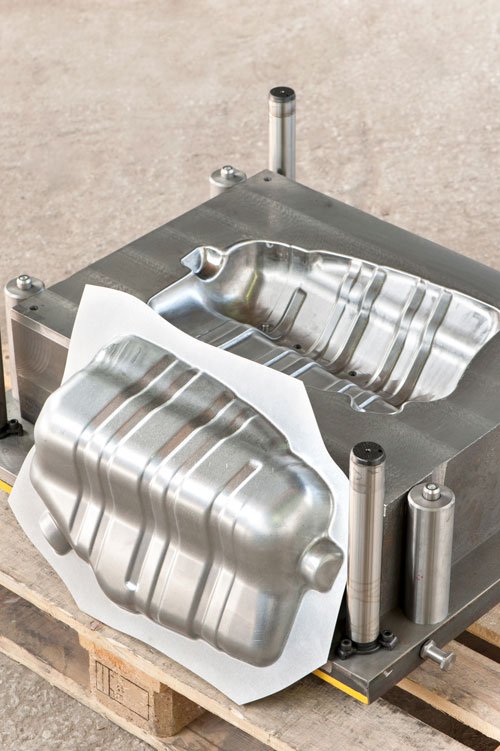
While the details of layout may vary substantially across sectors, the need for precision in light weight aluminum casting stays a constant. The capability to generate complex geometries with limited resistances makes light weight aluminum casting a suitable choice for designers and designers. The casting process enables for in-depth functions, such as intricate patterns and fine information, which are frequently challenging to attain with other making methods.
Applications of Aluminum Casting Across Industries
The flexibility of light weight aluminum spreading enables it to provide to a variety of markets, from automobile to aerospace and beyond. In the automobile sector, light weight aluminum castings are made use of for engine imp source parts, transmission real estates, and architectural components, improving gas performance and efficiency. Aerospace applications profit from aluminum's lightweight characteristics, with cast parts being integral to aircraft structures and engine parts, contributing to general weight decrease and fuel financial savings.
Additionally, the building and construction sector utilizes light weight aluminum spreading for complicated architectural components and fixtures, while consumer electronics take advantage of it for housings and internal parts that call check my reference for precision. The marine industry likewise makes use of aluminum spreadings for their resistance to deterioration, making them excellent for watercraft hulls and engine parts. Overall, the applications of aluminum casting vary, driven by its one-of-a-kind homes such as toughness, light-weight nature, and capability to create complex layouts, meeting the details needs of various sectors effectively.

Future Patterns in Light Weight Aluminum Casting Technology
The future of light weight aluminum spreading innovation is positioned to be formed by increased automation in casting processes, which assures to enhance efficiency and accuracy. Furthermore, the growth of innovative alloys is expected to increase the product residential properties and applications of light weight aluminum castings - Precision Aluminum Casting. Together, these patterns show a significant evolution in the capabilities and performance of light weight aluminum spreading
Automation in Casting Processes

Advanced Alloys Development
Current developments in automation have actually set the phase for innovative developments in light weight aluminum alloys, showing a broader pattern in casting modern technology. Manufacturers and scientists are significantly concentrated on creating high-performance alloys that boost toughness, rust resistance, and thermal conductivity. These advanced alloys enable the manufacturing of lighter parts without jeopardizing toughness, resolving the growing needs of sectors such as automobile and aerospace. The assimilation of additive production strategies even more complements alloy growth, enabling customized make-ups and complicated geometries. In addition, recurring research study right into recyclable light weight aluminum alloys aligns with sustainability goals, reducing environmental influence. As these trends proceed, the future of light weight aluminum casting promises to deliver much more efficient, versatile services with the ability of conference varied design challenges.
Regularly Asked Questions
Just How Does Aluminum Casting Contrast to Various Other Steels in Style Versatility?
Aluminum casting deals exceptional design adaptability contrasted to various other metals, allowing for light-weight structures and complex forms. Its fluidness throughout the casting process allows the manufacturing of intricate geometries that are testing with materials like steel or iron.
What Are Common Flaws in Aluminum Spreading and How Are They Prevented?
Usual problems in aluminum spreading consist of porosity, contraction, and incorporations - Aluminum Casting continue reading this Company. Prevention approaches entail proper mold and mildew style, temperature level control, and using top quality materials, ensuring perfect problems during the casting process to achieve defect-free elements
Can Light Weight Aluminum Casting Be Recycled, and How Does It Influence the Setting?
Light weight aluminum spreading can be recycled effectively, markedly lowering energy intake and source depletion. This reusing procedure lessens ecological impact, advertising sustainability by lowering garbage dump waste and decreasing greenhouse gas discharges connected with primary light weight aluminum manufacturing.
What Is the Typical Lifespan of Light Weight Aluminum Cast Components in Different Applications?
Light weight aluminum cast components usually have a life expectancy ranging from 10 to 50 years, depending upon their application and environmental conditions - Aluminum Casting Company. Aspects such as upkeep, usage, and exposure to harsh components substantially affect their resilience and durability
Exactly How Does Temperature Influence the Light Weight Aluminum Spreading Process and End Product?
Temperature level considerably affects the light weight aluminum spreading process, impacting fluidity, solidification time, and microstructure. Greater temperatures enhance mold and mildew dental filling, while reduced temperatures can lead to issues, eventually figuring out the end product's strength and durability.
Light weight aluminum casting incorporates various strategies, specifically pass away casting and sand spreading techniques. Die casting techniques play an important role in the light weight aluminum spreading industry, providing effective and precise techniques for creating complex shapes. Warm chamber pass away casting is ideal for low-melting-point alloys, making use of a submerged chamber to infuse the steel, while cold chamber die casting is excellent for light weight aluminum, where the molten metal is poured right into a different chamber before injection. Sand spreading methods offer as a basic technique in the aluminum casting landscape, allowing the production of intricate elements with relative simplicity. As sectors look for greater performance and accuracy, automation is positioned to reinvent light weight aluminum casting procedures.